Showing posts with label hunger games. Show all posts

Thursday, May 30, 2013

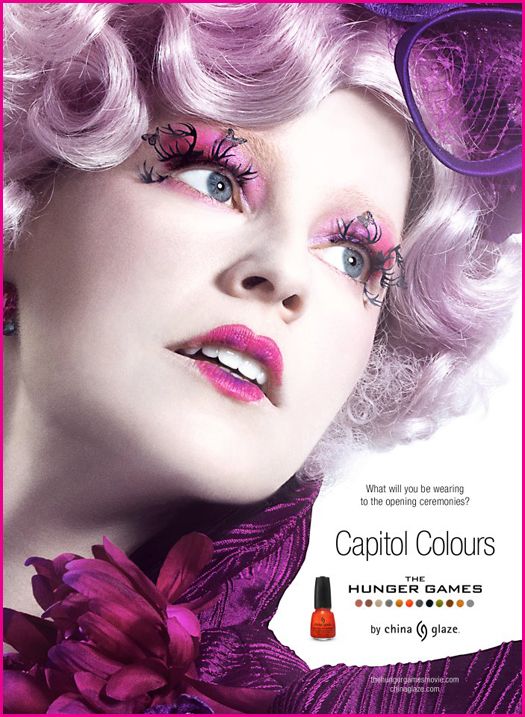
You Too Can Look Like Effie Trinket

Do you want to look like the mindless, frivolous, oppressive upper class of the fictional franchise The Hunger Games? Good news for you, Covergirl has recently announced their plans to enable young girls to look the part! If you have read the books or even seen the movie you should understand to a certain degree the deep irony of this. Imagine a new makeup kit fashioned after Romulans or how about a Nazi package? Yikes - and I am not even talking about Halloween costumes.

It isn't just live action films directed towards teenagers like The Hunger Games or Twilight that use marketing strategies that make me uneasy, but Disney also knows the leverage that comes to their sales department by helping young children identify with glitzy glamour and begin a lifetime of brand loyalty.

There is something wrong with marketing to children. Even more than just marketing, it is unethical to shape the values and self image of young people and can cause serious harm. Unfortunately the classroom is not exempt from all this.

Canada's Centre for Digital and Media Literacy stated in one report: "School used to be a place where children were protected from the advertising and consumer messages that permeated their world—but not any more . . . A school setting delivers a captive youth audience and implies the endorsement of teachers and the educational system." I don't think this applies to all Canadian and American schools, but examples such as supplying schools with technology in exchange for high company visibility and companies sponsoring school events does happen, and I think it is wrong.

What can a teacher do then, if their school or local corporations condone such targeting of kids?

The answer applies regardless of school environment. Due to the enormous impact of the Internet and mind-blowing rates of time children are exposed to media on a daily basis, we can't hide all the garbage from our children. However, we can teach our children how to critically consume the information that inundates their world. Said middle school teacher Caitlin Barry:

"We encourage them (students) to use Google Images and search YouTube to find compelling videos, but we haven't given them any tools to analyze all this media. In many cases, students have no idea how to be critical about what they consume.

Barry goes on to reference the foundational questions of media literacy (listed below): key elements we can push and discuss both in our classrooms and at home.

Who created this message? What creative techniques are used to attract my attention? How might different people understand this message differently? What values, lifestyles, and points of view are represented in, or omitted from, this message? Why is this message being sent?

After pondering the new Hunger Games makeup kit from Covergirl, imagine what a great educational opportunity a teacher or parent could have by running through these questions! 

We should also expand this process to teaching kids to be more critical about food consumption. In her TED talk, Anne Lappe explains important and frightening research about the food industry marketing to you children. Apparently, food marketers spend about 2 billion dollars per year just on marketing to minors. The little video below shares some of the same sentiment as Lappe's talk, including some dramatic music.


There are many things good people are trying to do to stop bizarre marketing schemes like the ones I have mentioned, but something every responsible adult can begin today is to learn and teach the basic questions of media literacy. We need our children to become thoughtful, responsible, and conscious adults - and that possibility looks quite bleak if the waves of marketing and information are consumed without thought or challenge.

Sunday, February 24, 2013

Entering the Conversation

I asked a young student I know if they would be willing to write a short guest post for my blog. Check it out!


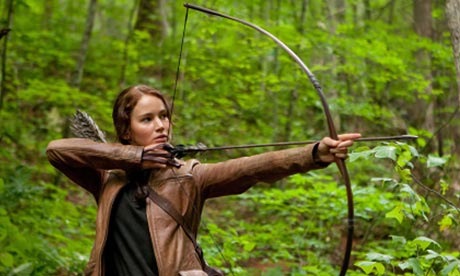
Have you ever read a book or seen a movie that you really liked? Some (or lots) of people have favorite books or movies that, as an 11 year old girl, I can relate to. I have been reading one of my favorite books lately. It's called The Hunger Games. In the book, a girl named Katniss lives in a place called panem. Panem is split up into twelve districts and each has a certain thing that they do. For instance, district 12 mines coal for fire in the capital. The capital is the ruling city. The capital people are always dressed quite weird, with wigs and tattoos all over their bodies. Katniss lives in district 12, her father had died in a mine explosion, and she has a best friend named Gale. The reaping is when all of district 12 population is gathered together and a boy and a girl's names are pulled from two glass balls. Two per district. The two "tributes" are taken to the capital to train and then they are placed in an arena to fight to the death...

The hunger games is a book that I will never stop loving. I think that if you where to try it that you would really like it too!:)

~ Sophie (San Diego, CA)


I think this short paragraph is a delightful piece of writing from a young person who is clearly interested in a piece of text. I wonder, however, how often anyone other than her teacher gets to read stuff like this! So that leads me to a question: why do we write multiple papers in school? From grade 2 or so all the way up to the graduate level, students draft and produce hundreds of papers. Obviously in the process they learn many things such as how to craft an argument, think through evidence in a logical way, and of course use correct grammar and punctuation.

But after that, is there any benefit to writing all these papers? I have spent countless hours, exhaustively slaving away at drafts and final copies of many papers - with my sole intention of getting a good grade and turning it in on time. You may be different (I hope you are!).  When I look back on these assignments that went from my hand to my teacher to the trash, I wonder if there couldn't have been a better way to treat my writing.

You may have heard of the "Burkean Parlor" - an analogy given by Kenneth Burke about how scholarly writing is like a conversation. The video below explains in case you need to brush up.


Why the analogy and video? Well, we need to do better at helping students learn from an early age that they have the ability, capacity, and skills to enter conversations. Rather than writing a paper that is read by just their teacher (and maybe a parent), students can engage in real conversations and can enter these arguments with their own evidence, writing, and perspective. What if the student above was able to submit this piece of writing about a book she loved to other students who could share their thoughts? Obviously safety and privacy are an important issue when working with minors, but it is possible.

How? Blogging is the most obvious, and many teachers are experimenting with that. Social media in general offers students the ability to discuss issues and offer evidence. These concepts aren't really new, and yet many people aren't aware of them.

What do you think? Is this is a good idea? Should dissertations, theses, or general papers in K-12 schools be geared towards larger discussions than just those in charge of the formal grades? I think so, but am curious about you. BTW, I may be very late in "the conversation" about the role of blogging in the classroom and perhaps I should do some more listening before sharing my thoughts.