Saturday, March 2, 2013

Teaching the Monster Some Manners

Said Abraham Lincoln, “If you would win a man to your cause, first convince him that you are his sincere friend.” Similar to this principle, President Ezra Taft Benson of the Church of Jesus Christ stated: “Above all, be a genuine friend to the individuals and families you teach.” Being a sincere and genuine friend is not easy for me with even the people I know - let alone a group of students who are complete strangers to me. And yet generating not only care and concern fo these students, but true friendship, may be the best way to help a child or struggling college student.

A friend listens and a friend reaches out
The teachers in my life who have led me to new heights and helped me in countless ways have always shown me they were my friend first, and my teacher second. Actually, I think it is safe to say that those who we choose as friends become our most influential teachers. Whether we are talking about informal "street knowledge" sorts of things, or purely academics, the principle of friendship as a condition to effective and lasting teaching is an essential one.

A friend doesn't use the first time you meet as a chance to scare or threaten (like some teachers seem to do on the first day of class).  A friend is willing to consider your point of view as well as accept that there are problems without solutions. "A friend is more concerned about helping people than getting credit. A friend cares. A friend loves. A friend listens. And a friend reaches out" (Monson, 1997).

The power of friendship is incredible. Below is one of my favorite friendship scenes, taken from The Bride of Frankenstein. The old man's innocence and kindness work wonders on the very Monster the whole town is seeking to kill. In some ways I see the monster as a representation of what we often think of as "problem children," or even our own fears and inadequacies of teaching and learning.


Perhaps the Monster is a good representation of our country's attitude about standardized testing? Or the ideology the pervades the rhetoric on the political stage about how we must be "better" than every other country in everything. Maybe the Monster in our classrooms is something beyond our current understanding and, like the blind man, we don't understand the "problems" or dangers of what we face.

If our focus is on friendship rather than scores, student's lives rather than their GPA, then perhaps the underlying purposes of testing and classroom management and much of the education revolution debate  could be met or exceeded.

Yes, the Monster can be taught manners - but only by friends.

Sunday, February 24, 2013

Entering the Conversation

I asked a young student I know if they would be willing to write a short guest post for my blog. Check it out!


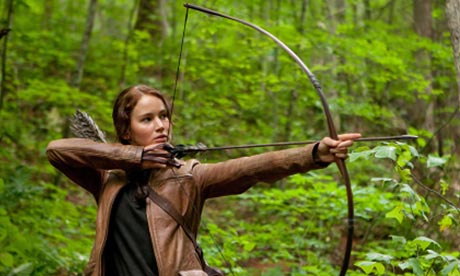
Have you ever read a book or seen a movie that you really liked? Some (or lots) of people have favorite books or movies that, as an 11 year old girl, I can relate to. I have been reading one of my favorite books lately. It's called The Hunger Games. In the book, a girl named Katniss lives in a place called panem. Panem is split up into twelve districts and each has a certain thing that they do. For instance, district 12 mines coal for fire in the capital. The capital is the ruling city. The capital people are always dressed quite weird, with wigs and tattoos all over their bodies. Katniss lives in district 12, her father had died in a mine explosion, and she has a best friend named Gale. The reaping is when all of district 12 population is gathered together and a boy and a girl's names are pulled from two glass balls. Two per district. The two "tributes" are taken to the capital to train and then they are placed in an arena to fight to the death...

The hunger games is a book that I will never stop loving. I think that if you where to try it that you would really like it too!:)

~ Sophie (San Diego, CA)


I think this short paragraph is a delightful piece of writing from a young person who is clearly interested in a piece of text. I wonder, however, how often anyone other than her teacher gets to read stuff like this! So that leads me to a question: why do we write multiple papers in school? From grade 2 or so all the way up to the graduate level, students draft and produce hundreds of papers. Obviously in the process they learn many things such as how to craft an argument, think through evidence in a logical way, and of course use correct grammar and punctuation.

But after that, is there any benefit to writing all these papers? I have spent countless hours, exhaustively slaving away at drafts and final copies of many papers - with my sole intention of getting a good grade and turning it in on time. You may be different (I hope you are!).  When I look back on these assignments that went from my hand to my teacher to the trash, I wonder if there couldn't have been a better way to treat my writing.

You may have heard of the "Burkean Parlor" - an analogy given by Kenneth Burke about how scholarly writing is like a conversation. The video below explains in case you need to brush up.


Why the analogy and video? Well, we need to do better at helping students learn from an early age that they have the ability, capacity, and skills to enter conversations. Rather than writing a paper that is read by just their teacher (and maybe a parent), students can engage in real conversations and can enter these arguments with their own evidence, writing, and perspective. What if the student above was able to submit this piece of writing about a book she loved to other students who could share their thoughts? Obviously safety and privacy are an important issue when working with minors, but it is possible.

How? Blogging is the most obvious, and many teachers are experimenting with that. Social media in general offers students the ability to discuss issues and offer evidence. These concepts aren't really new, and yet many people aren't aware of them.

What do you think? Is this is a good idea? Should dissertations, theses, or general papers in K-12 schools be geared towards larger discussions than just those in charge of the formal grades? I think so, but am curious about you. BTW, I may be very late in "the conversation" about the role of blogging in the classroom and perhaps I should do some more listening before sharing my thoughts.

Tuesday, February 12, 2013

Paperman & Hollywood Love: Some Valentine Thoughts

I had the delightful experience of watching Paperman in theaters last week. It has been bouncing around the Internet, but this was the first time I actually saw it. The animation is beautiful, the music charming, and the storyline . . . interesting.


I love the design in the film, and it was remarkable how much feeling and emotion in the character's face and body language the artists were able to develop. However, am I the only one that was sickened by the blatant message of "helpless love"? Sure this is a cutesy little animation film, not meant to be a brow beating didactic piece, but as we all should recognize - all media (regardless of the intent of the creators) teaches something.

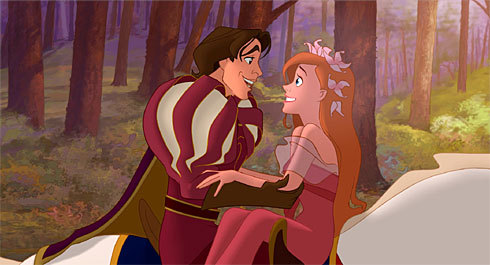
"We shall be married in the morning!" Tangled (2010)
Since the golden years of Hollywood, happy endings and lovely romantic stories have been a staple of the cinema. Shakespeare's comedies and beyond often include short and passionate romantic relationships, giving the impression that such relationships are normal. These theatrical influences are felt in our culture as young people continually think they must "find their soul mate" and they must find "the right person." This mindset is damaging and simply not true. The whole idea of "falling in love" suggests that a person can't help it, and in the end must give up their agency and ability to reason and function as a normal human being and just give into the desire to be with a person who strikes their fancy. As the paper airplanes held down the character in the subway (in the film above), the audience laughed with delight, but I couldn't help but think about the demented sense of fate and loss of choice.

Amanda Seyfried and Eddi Redmayne's characters fall in love in about ... 1 minute (different in the book!) in Les Misérables (2012)

I know I am not being completely fair. We poke fun at it all the time (at least I do with my friends and family) about how quickly characters fall in love and can only be happy with this one certain person. Yeah, we might recognize that love is more than just thinking someone looks nice, but the media that our children and students consume usually doesn't explain that. Just to be clear, I don't mind that. I know that we don't have 3 hours for the love plot between Marius and Cossette to develop like maybe it should! But I also think we have a responsibility to note what the media is teaching about relationships and help children identify what is real versus what is merely dramatically appealing and convenient.

So, happy Valentines day! May you spend your money, express your love, and remember that you have a choice in whom you give your time, talents, and affection.